The Value of one Don!!
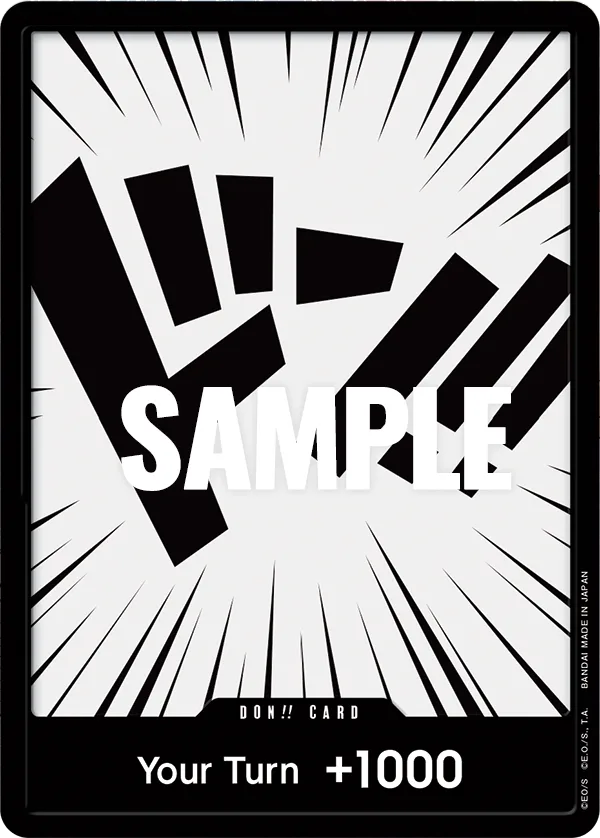
Don!! is the “currency” (aka in TCG terms Mana) that you have available in OPTCG.
But how much is a Don!! worth?
This is a crucial concept to grasp to understand if you want to determine the worth of a card.
We can answer this question with this formula, that Bandai always applies when printing new “Vanilla” cards (with the term Vanilla we identify text-less cards, filler to dilute the common card pool that you will find in every expansion).
X Don!! gets you
(X+2)*1000 Power + 1000 Counter
OR
(X+1)*1000 Power + 2000 Counter
There are countless examples you can find in your collection that adheres to this rule.
Let’s look a some Blue Vanillas for example.
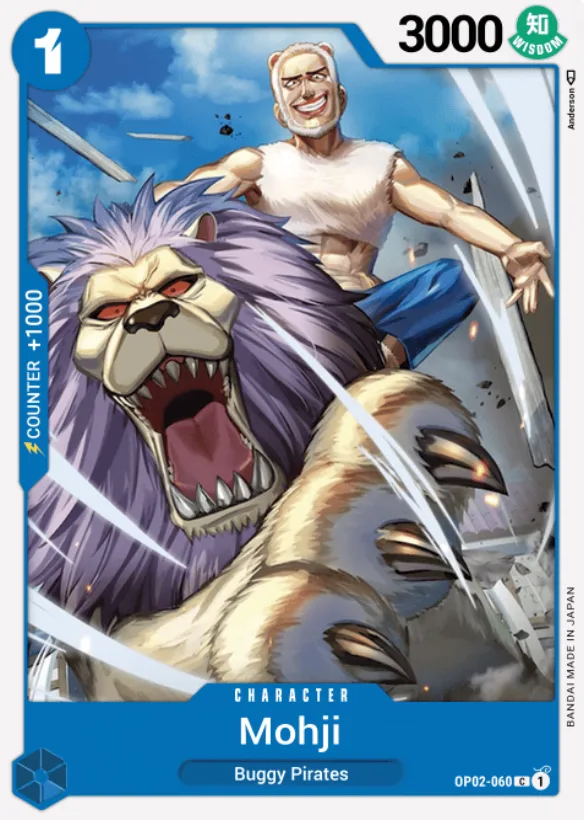

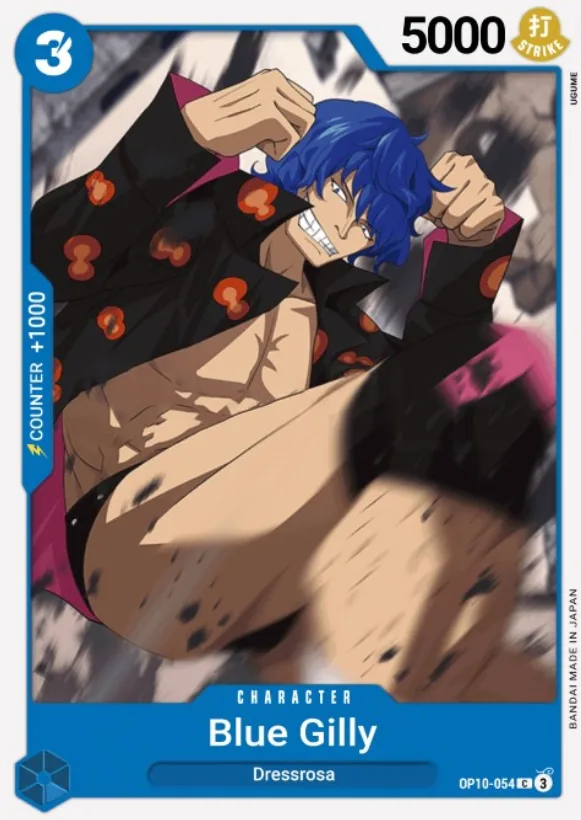
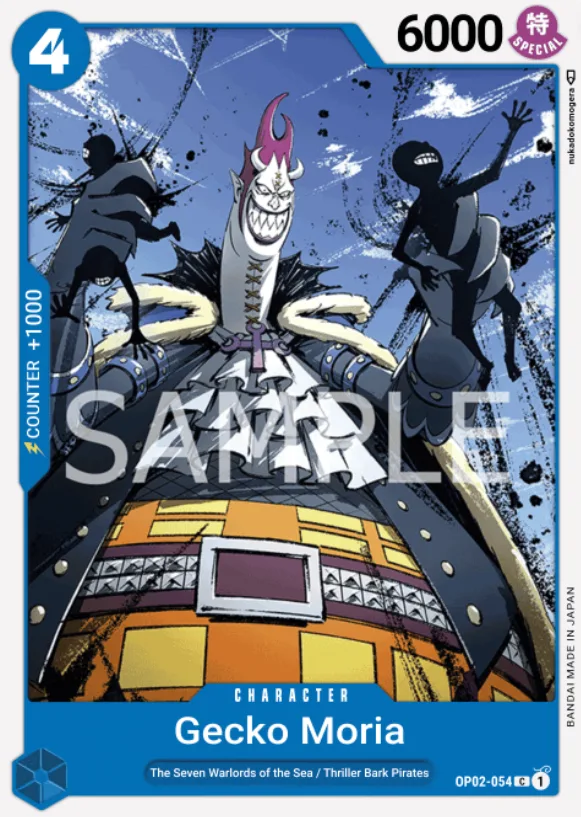

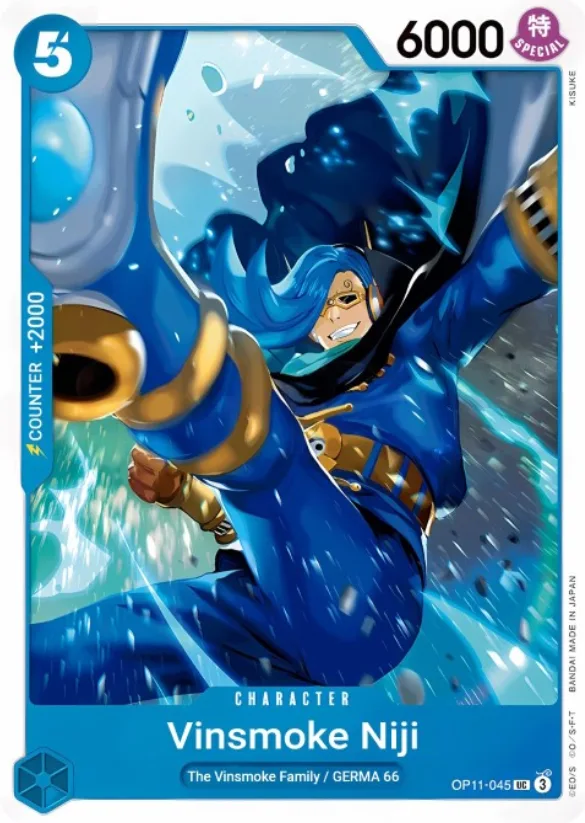

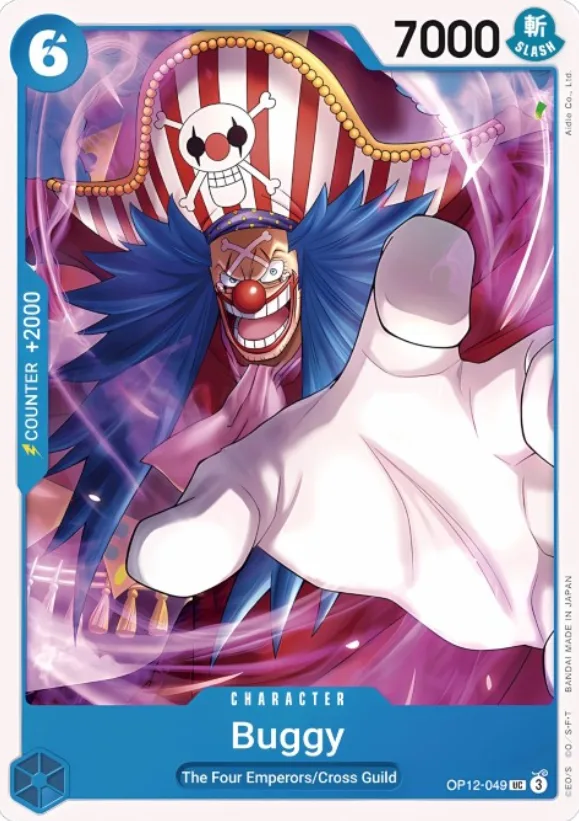
This is a core formula you cannot escape and that will always apply (unless the cards are broken, more on that later).
When printing Vanillas, Bandai usually adopts the 2K counter variation on the formula only on 5-6 cost cards, but the equation is always respected.
With this in mind, we could state that X Don!! gets us X+3 “Value”.
By “Value” I mean something the cards provides, be it raw Power, defense Counter or, most importantly, special effects!
So the Don!! is invested in either Power, Counter (with a max Counter value of 2000 we cannot exceed) or, in case of cards with text (which are basically all played cards and what makes a TCG fun) invest them in special effects.
Let’s see a simple example.
Here we have a Vanilla Holly.

It costs 3 Don!!
Therefore, with 3 Don!! spent we should expect 6 points in Value
Now let’s look at our formula…
The Value is splitted as (3+2)*1000 = 5000 Power + 1000 Counter
Pretty straight forward, right?
When adding special effects to the mix, the formula still holds up.
Let’s look at the classic Zoro Rush, the stereotipycal aggro card.

3 Don!! gets us (3+2)*1000 = 5000 Power + 0 Counter…
But the remaining Value is invested in the “Rush” keyword
Does all the keyword have the same weight? Not quite, Blockers are more expansive.
Let’s compare a 2 cost vanilla to its Blocker counterpart (you can do this test with every colour, look into your collection).

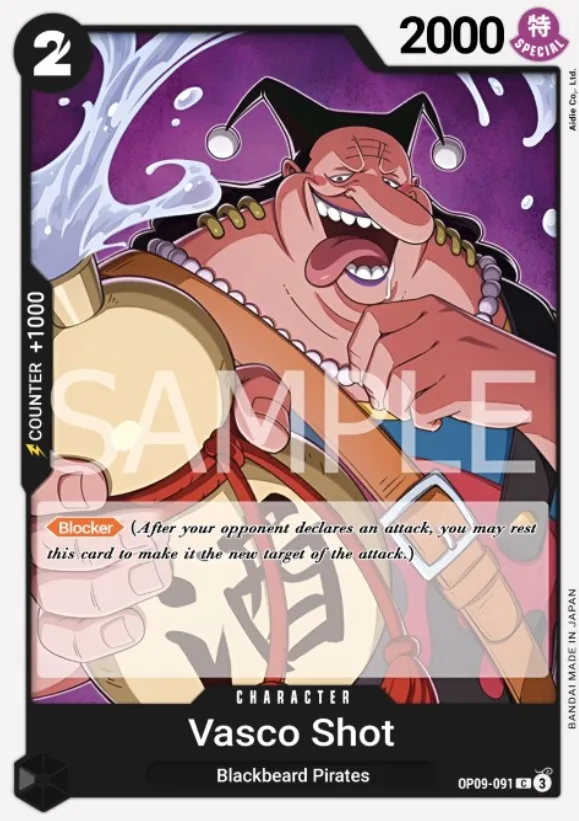
2 Don!! in a Vanilla gives us a (2+2)*1000 = 4000 Power card with 1000 Counter
But for the blocker?
We should expect (2+1)*1000 = 3000 Power + 1000 Counter…
But the Power here is only 2000! This is because, from the 5 original unit of “Value” we get from 2 Don!!, 2 are required to be invested in the Blocker keyword, 1 “Value” spent is not enough.
And it is always like that…Unless you’re Kurozumi Higurashi and for some reason you’re literally powercreep, but that only goes for Purple lol (check all other colors and they all respect the formula).
Jokes aside this is probably due to the fact that Blockers are more impactful on the state of the game (potentially being an extra-life or straight-up game saving) than a Rusher.
Another example of how much Bandai thinks the Blocker keyword is strong can be found in 1-cost cards.

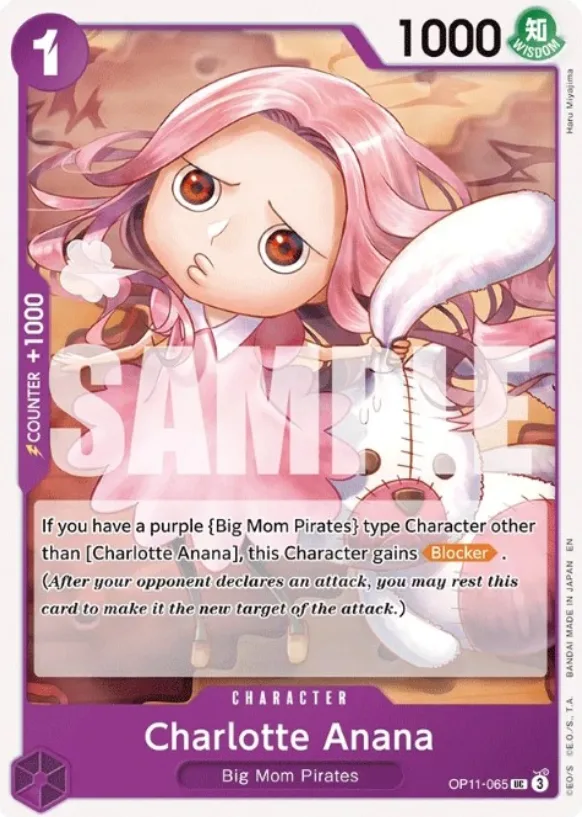

For 1 Don!!, as we saw in Vanilla Mohji earlier, we expect to get 4 “Value” unit to invest.
As we can see in Chopper, or in any other color NON-CONDITIONAL Blocker, seems that 3 of this Value goes to the Blocker keyword, leaving the card with a mere 1000 power and no Counter value (Counter value that is always found in all Conditional Blockers, like Charlotte Anana or Ripper, because a drawback needs to be compensated).
This is because, both earlier in the game or later in the final turns, having a blocker for 1 Don!! heavily impacts the flow of the game, potentially dictating its outcome.
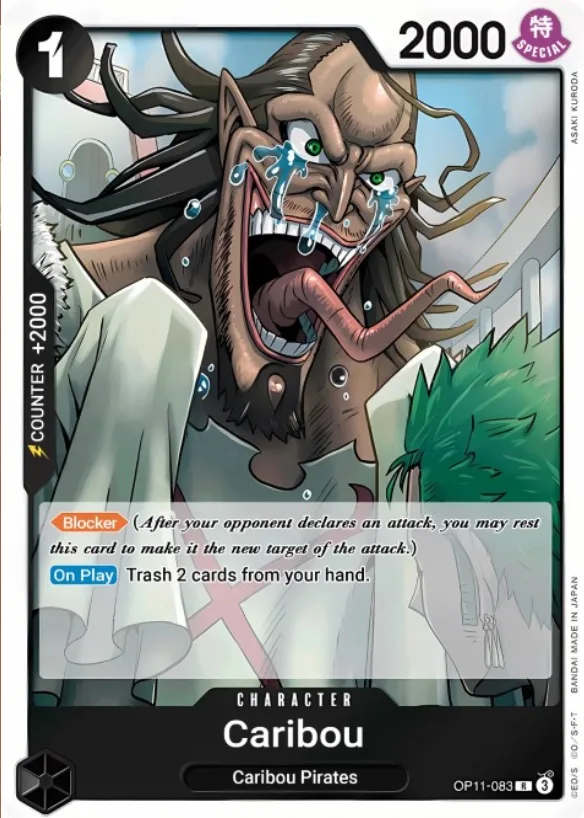
This is the reason they will never print a 2K Counter AND Bloc-oh, hi Caribou…
Well, not without a huuuuuge drawback like the Trash 2 On Play.
It would be a shame if there was a leader that could abuse this card without paying the tremendous drawback cost… Hmmm… Zehahahaha!
One could argue that him being a non-BlackBeard Pirate searchable is kinda enough to make it balanced, but seeing how other 1-cost blockers are treated that’s a bold claim.
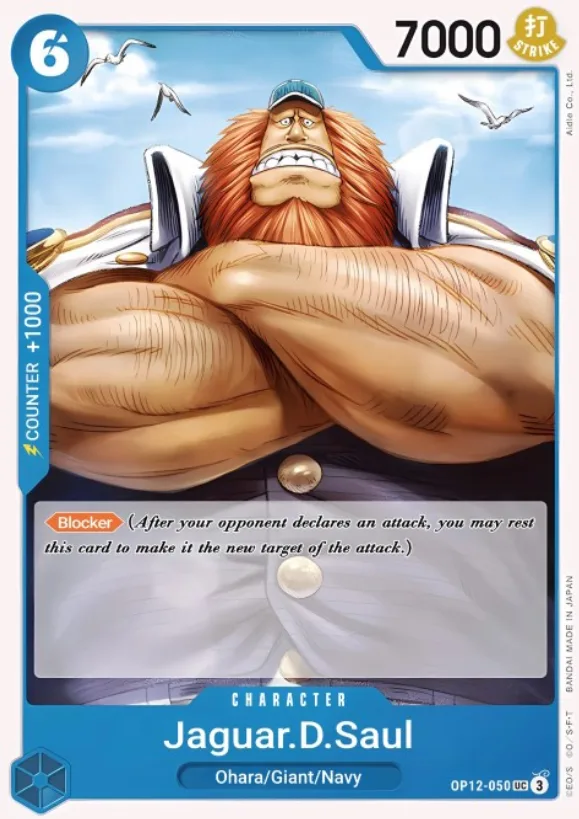
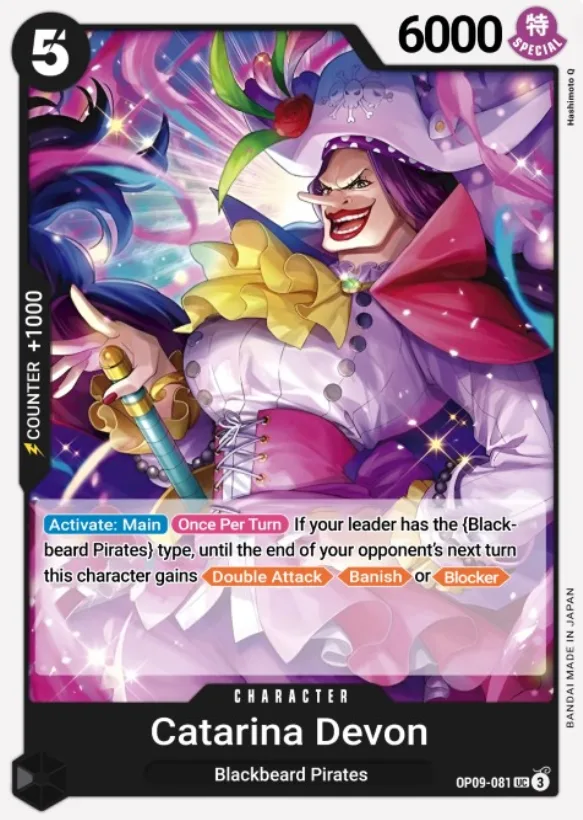
The more Don!! are invested in a card though, the less Value goes in to the Blocker keyword, making it regress back to = 1 Value.
For Banish and Double Attack there are less clear examples (there are too few cards with only the single unconditional keyword to guess a pattern) but it seems they follow a similar approach, with Banish being more cheap like Rush and being worth 1 unit of Value, and Double Attack being worth 2 Value units like Blocker, probably because that too is a more impactful keyword.
Having a strong drawback, like being Leader-locked as we saw earlier, generally makes up for the availability of one or more keywords (Catarina is a balanced card).
The last keyword, Trigger, is kinda hard to evaluate, since there are really a variety of different effects, but the most impactful one “Trigger: Play this card” is generally worth 1 to 2 units of value, and it’s usually kinda fair.
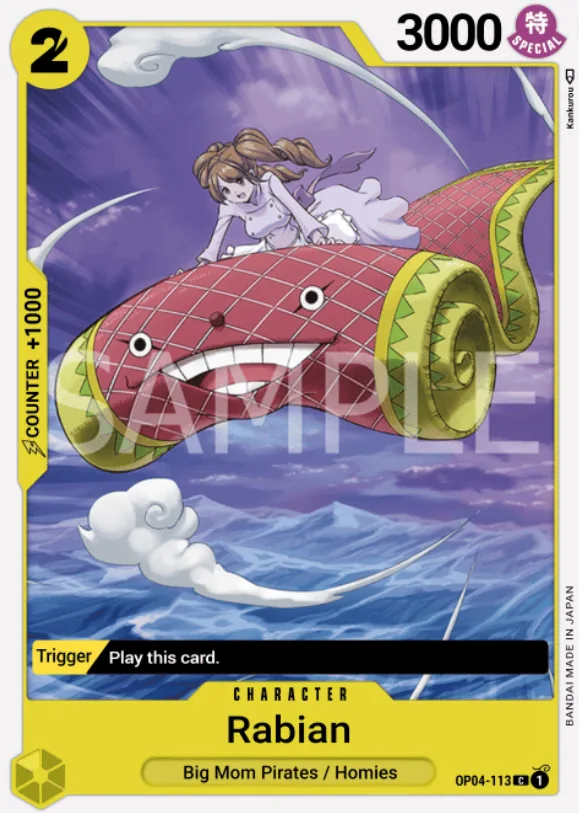
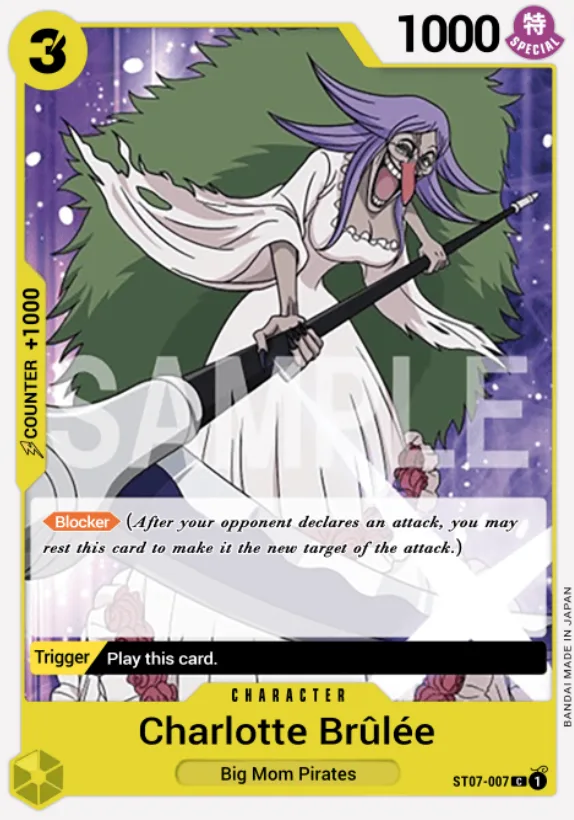
A generic 2 Cost 3000 Power 1k Counter with Trigger “Play this card” is available in every color, and it looks fair: in this low impact card the Trigger is valued as 1.
Brulee has Blocker: that makes it a really impactful trigger, especially if it’s your opponent last life! Hence why the power is only 1000 even if the card cost is 3.
3 Cost = 6 Value, split 2 for Blocker, 2 for the trigger, 1 for counter and the last 1 for Power.
There is also the argument that for Triggers you are not only investing the Don!! of the card, you are also gambling part of your already strict available slots in your deck list for sub-par cards, for a chance that those cards might be in your lives (and according to ChatGPT there’s a 35% chance to trigger it ONCE if you run that card 4x), so you are relying even more on luck in an already luck dependant game like a TCGs.
Stronger Trigger cards (e.g. Morley or Karasu Blocker in Belo-Betty) that are also good if played from hand generally have strict Trigger conditions to be met (i.e. specific life totals) or sacrifices (i.e. trashing cards) to be made as additionals drawback to compensate.
Yellow cards usually have even more strict drawbacks because of the colour theme of life-altering ability, which could lead to stronger combos not available in other colors..
But we will delve into more in depth about triggers in a future article.
Besides Keywords, most card effects affects either the state of the board, the state of your hand and the lives of the players: let’s see how much this operations “costs”.
1 Cost so-called “Searchers” are generally what you’re looking for in your average mulligan.
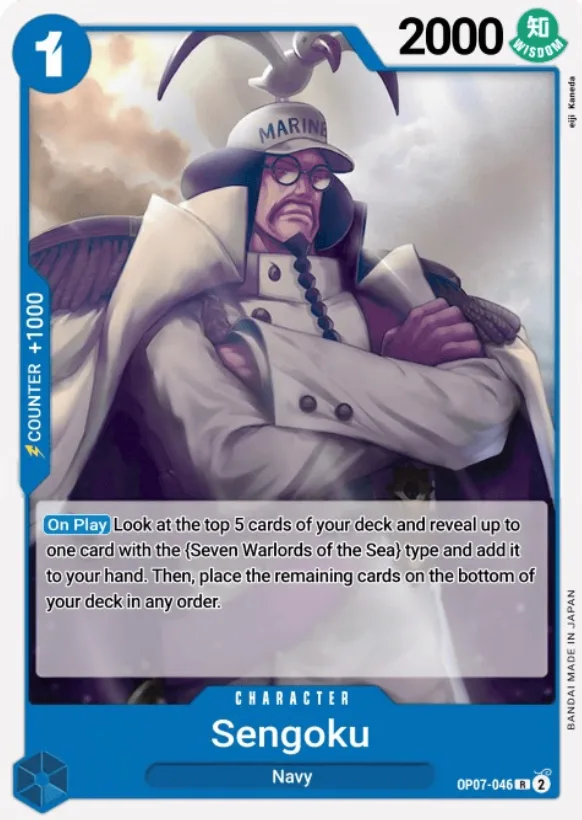

There are plenty of examples of “Look at top X, draw tribe Y”, so it’s very easy to estimate that Bandai values roughly as 1 the Cycle of 1 card.
Cost 1 = 4 Value split 2 for 2000 Power, 1 for 1K Counter and 1 for Draw 1
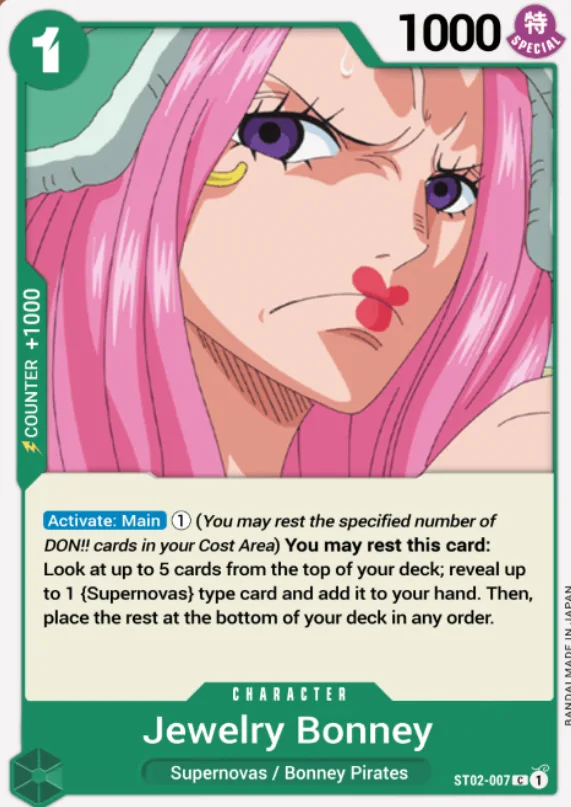
Note that Repeatable Cycle (as in Active: Main instead of On Play), is valued usually slightly higher, and this kind of 1 Cost searchers tends to have 1000 or even 2000 less Power.
It also requires the player to invest 1 additional Don!! and rest the Character, potentially putting it at danger of easier removal by the opponent.
This is usually an ability printed almost always on Green cards (e.g. Momonosuke or Hyiori), so an even greater drawback is needed to compensate the easier time that Green as a color has in re-standing used Don!!, since it is its main theme.
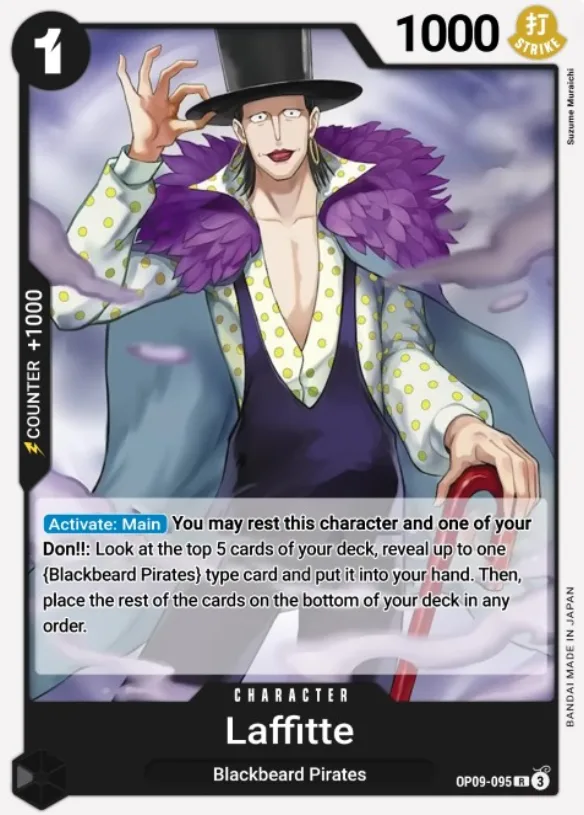
In Zoro-Juroo we have another example
4 Cost = 7 Value, splitted 6 on 6000 units of Power and the last one for the Cycle (although slightly worse since it’s color restricted), leaving us with a Counter-less balanced card

There are plenty of other effects out there: anti-removal, Power buffs/debuffs, healing… and these are a bit trickier to evaluate, because often the price is not paid only in Don!!, but in some other way too.
Take this Zoro for example.
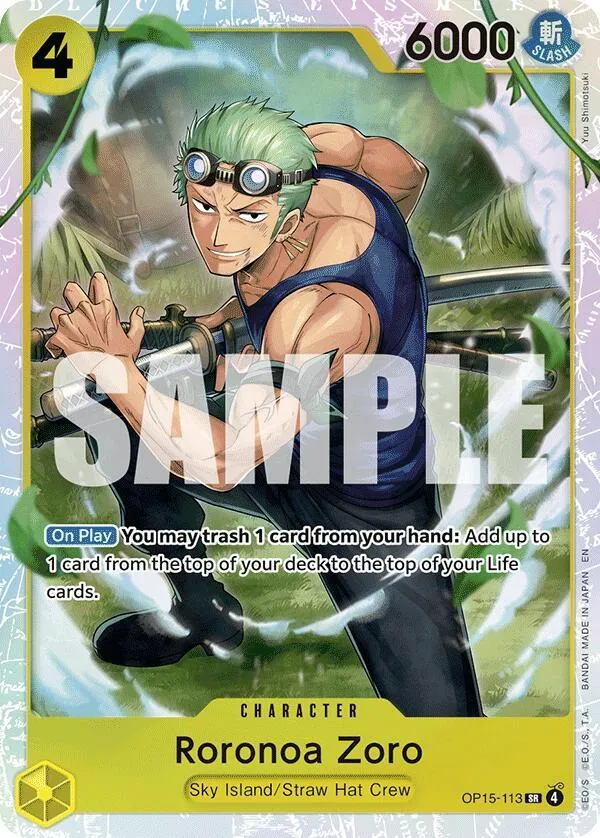
4 Cost = 7 Value, 6 go into 6000 Power, leaving just 1 unit for the On Play… but adding a card to your Life is a really strong effect (a straight-up extra life!), way more than 1 Value.
So how does Bandai balance it? You pay the difference with 1 extra card from your hand: trash 1, heal 1.
This was a general overview to help you understand how to evaluate a card: count the Don!!, add 3, and check where the Value went.
And if a card looks way too strong for the Don!! you pay for it… well, then we’re talking about powercreep.
Skilleglyph
In olden days, ere Power crept,
an Ogre stood, for six to pay:
six his strength, and seven his life,
no more, no less, in any way.
Beside him stood a beast of snow:
four to pay, and four his might,
and five the life he did possess;
no more, no less, and all was right.
Boulderfist Ogre, Chillwind Yeti,
remember well each honest name,
for all was fair and all was steady,
till Piloted Shredder came.